

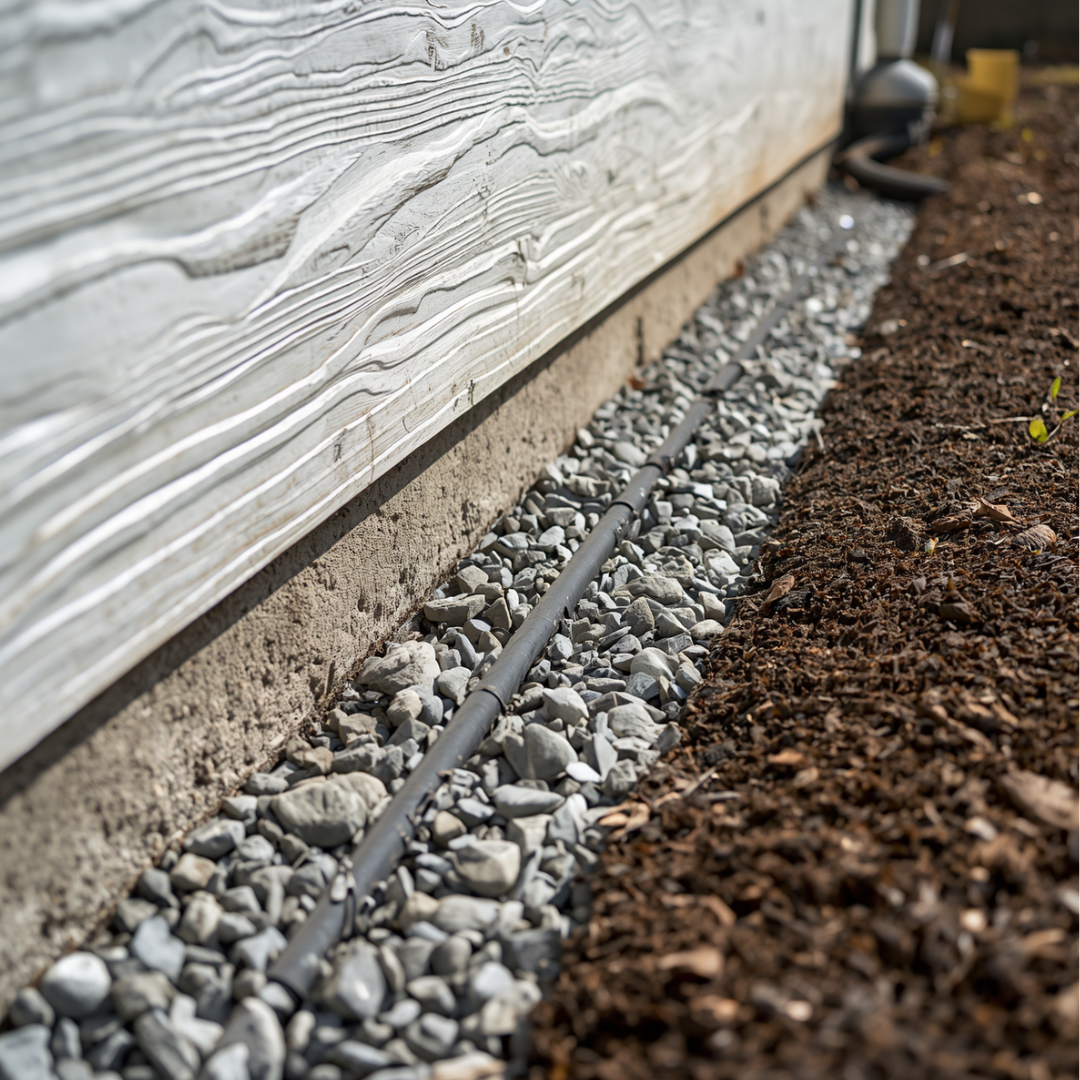
In Central Texas, managing water around your home isn’t just about curb appeal—it’s about protecting your foundation, landscaping, and long-term property value. One of the most common drainage solutions we see during home inspections is the French drain. At Barfield Home Inspection, homeowners regularly ask us how French drains work, whether they’re effective in our soil conditions, and what issues can arise if they aren’t installed or maintained properly.
This guide breaks down everything Central Texas homeowners should know about French drains and what our inspectors look for.
Why Drainage Is a Big Deal in Central Texas
Central Texas homes face a unique combination of challenges:
- Expansive clay soils that swell when wet and shrink when dry
- Short, intense rain events that dump large amounts of water at once
- Sloped lots and limestone bedrock common in Hill Country areas
When water isn’t carried away from the home efficiently, it can lead to:
- Foundation movement and cracking
- Soil erosion around slabs or pier-and-beam supports
- Standing water that damages landscaping
- Increased moisture near crawl spaces or basements
Proper drainage is not optional—it’s essential.
What Is a French Drain?
A French drain is a subsurface drainage system designed to redirect water away from problem areas. It typically consists of:
- A trench lined with landscape fabric
- Gravel or crushed stone
- A perforated pipe that collects and redirects water
- A discharge point downslope or away from the home
Despite the name, French drains are not always installed near fences or property lines—they are strategically placed where water naturally accumulates.
Common Uses for French Drains in Central Texas Yards
During inspections, we most often see French drains installed to address:
1. Poor Yard Drainage
Low areas where water pools after rain are prime candidates. These wet zones can kill grass, attract mosquitoes, and slowly migrate toward the foundation.
2. Foundation Protection
French drains placed near the perimeter help divert water before it reaches the slab or foundation footings.
3. Hillside and Slope Control
On sloped lots, drains help slow and redirect water runoff that might otherwise erode soil or overwhelm retaining walls.
4. Downspout Overflow
Many systems are tied into gutter downspouts to manage roof runoff more effectively.
Are French Drains Effective in Central Texas Clay Soil?
Yes—but only when installed correctly.
Clay soil drains slowly, which makes surface drainage difficult. A French drain provides an engineered path for water, but common problems we see include:
- Trenches that are too shallow
- Incorrect pipe slope (water can’t flow properly)
- Poor-quality gravel or no fabric barrier
- Drain outlets placed too close to the foundation
When a French drain is poorly designed, it may actually hold water near the home, increasing the risk of foundation movement.
What Barfield Home Inspection Looks for During an Inspection
When inspecting homes with French drains, we pay close attention to:
- Visible water discharge points – Are they present and clear?
- Signs of settlement or erosion along the drain path
- Standing water near the foundation after rain
- Integration with gutters and grading
- Maintenance issues, such as clogged or buried outlets
While a home inspection doesn’t involve digging up the system, surface clues often tell us whether a French drain is functioning as intended.
Signs a French Drain May Not Be Working
Homeowners should watch for:
- Persistent soggy areas
- Water stains on foundation walls
- Soil pulling away from the slab
- Landscape rock or mulch washing away
- Mold or musty odors near crawl spaces
These signs often show up during inspections and may indicate the need for evaluation by a drainage professional.
French Drains and New Homeowners
If you’re buying a home in Central Texas, a French drain can be a positive feature—but only if it’s properly installed and maintained. During the inspection process, we help buyers understand:
- Why the system was installed
- Whether it appears to be functioning
- What maintenance may be required
Knowing this before closing can prevent unexpected foundation or drainage repairs down the road.
Maintenance Tips for Homeowners
To keep a French drain working effectively:
- Keep discharge outlets clear of debris
- Avoid covering drain paths with soil or mulch
- Ensure gutters and downspouts remain connected
- Monitor yard drainage after heavy rain
Even a well-installed system can fail without routine observation.
Final Thoughts from Randy and the team
French drains are a valuable tool for managing Central Texas water challenges—but they are not a “set it and forget it” solution. Proper design, installation, and maintenance make all the difference.
At Barfield Home Inspection, we help homeowners and buyers understand how drainage systems impact the overall health of a home. If you’re purchasing a property, noticing water issues, or planning landscaping improvements, a professional inspection can provide peace of mind.
Good drainage protects more than your yard—it protects your home.